In the Supermarket (2014)

In the supermarket things are getting restless.

People shuffle in the queue for the self-scan machines, glaring passively, harrumphing at no one in particular, but pointedly and with feeling.

At the self-scan machines things are little better. Toes are tapped at tardy assistants. Red lights blink. Calm mechanical voices ask for items to be added or removed from the bagging area. Shrill human voices imprecate.

There is a man – short and sullen, overladen with fruit – who cannot pay for his rockmelon. An assistant finds it for him. It is under M, because it is a melon.

‘I have complained about this before. It is a rockmelon. It belongs under R.’

‘Not much I can do about it sorry.’

‘There is. You can record my complaint. I want to make an official complaint.’

Together they look to the complaints counter. It is oppressed by the crowd that has gathered there. Its defenders are inadequate, soon to be overwhelmed.

The assistant shrugs.

The sullen vegetarian snarls, his teeth clacking and his eyes all a-spark.

‘I’ve complained about this before. It’s not good enough. It’s a waste of your time and mine.’

The assistant shrugs.

The vegetarian’s eyes bulge. Veins rise on his neck, at his temples.

‘Excuse me,’ says a tall woman. Her body is a work of art, and a canvas. Lean and pretty. Coloured inks on her arms, her thigh, her décolletage. ‘There’s three machines not working.’

Red lights are blinking over the three machines.

‘Just a minute,’ the assistant says.

From somewhere in aisle three there’s a predatory howl.

The queue for the machines surges.

A display of produce crashes to the ground, shattering glass and spilling preserves and spreads marked down for quick sale.

At check-out number seven there’s a young girl’s scream.

At the complaints counter the splintering of wood and a panicked cry.

A fist in thrown.

Teeth spill, skipping across the polished floor.

A head strikes a counter with a wet crack.

There’s the smell of blood and violence in the air.

The vegetarian leaps upon the assistant, bears him to the ground where others rush in with boots and stomping feet for them both.

Someone tries to climb the bread aisle, to safety, but the whole thing topples and they fall into the surging mob.

Men are vaulting the complaints counter, clawing at their victims, bursting throats between their teeth.

I take my receipt and the goods I’ve purchased. I step away, through the automatic doors, past the buskers splintering their guitars against each other, past the collisions and chaos of the car park, to my car.

Best to get home. The kids will be wanting their dinner.


Tolerance, boycotts, and the separation between art and artist

Originally this post had been meant to coincide with the release of the Hollywood adaptation of Orson Scott Card’s “Ender’s Game”.  I have subsequently added to it, and it is now quite long.  I would welcome any responses to the questions I pose.

5212-6484647364-ender

In the lead up to Enders Game there had been controversy, and calls for a boycott, on the basis of Card’s strongly held and strongly expressed views about homosexuality, homosexuals, and the law (and apparently just his “goddamn lunacy”).


Now I haven’t seen the film, and it has been about two decades since I’ve read the book, so I don’t want to broach here the topic of whether the material reflects Card’s views (if it does my adolescent-self didn’t pick up on that consciously, but then my adolescent-self had no real concept of LBQGTI realities, heteronormativity, or cisgender).  Nor do I want to discuss the quality, or otherwise, of the film or its source. What did interest me in the discussion is the way that our knowledge of the artist’s personal views and politics influenced the way we received the text.

I got distracted, as happens, and missed the launch of the film (which premiered and screened and disappeared without too many waves of praise or condemnation) and shelved the issue, thinking I may have missed its relevance. Then Shia LaBeouf was in the news, and now Woody Allen, and while the issues that caused the controversy which now surrounds each of these men and their art are vastly different in nature, the core issue of interest spans all three:

Can we / should we judge art by what we know of the artist?

(I will discuss each in turn and try to speak sensitively, particularly regards Dylan Farrow, but I do here want to give a trigger warning on discussions of child sexual abuse, just in case).

Now in posing that question, I accept as a baseline assumption that we do. I know I do. To take one example: I won’t listen to Chris Brown songs because, a) domestic abuse, and b) they are terrible. Yet despite Roman Polanski’s history I can still appreciate his version of Macbeth.
I assume others experience these same reactions.

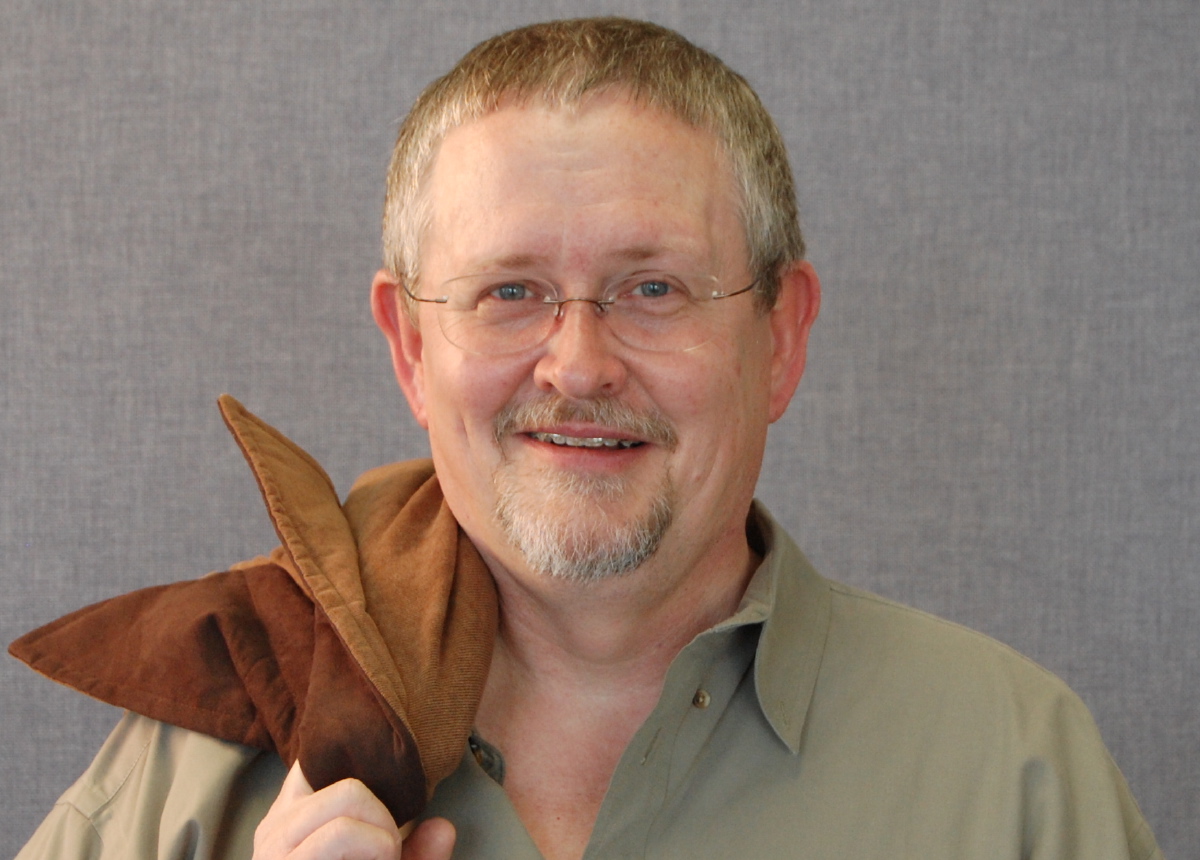
Orson_Scott_Card_at_BYU_Symposium_20080216_closeup

When Orson Scott Card’s novel Ender’s Game was soon to be released as a film many groups (such as Geeks Out) called for boycotts, or stated that they wouldn’t go to see the film, as a form of protest against Card’s homophobia.  Tyler Coates responds directly to this call, accepting that Card was a homophobe (or at least that Card had published an article in 1990 which contained homophobic material), yet disagreeing with the boycott. In doing so he explicitly separates the art from the artist. He allows that we can accept that Card is homophobic, without the entailment that his book, or the film based upon it, are themselves homophobic.
Card also responded to the boycott. His call for those who accused him of intolerance to now show him tolerance was a classical repositioning argument, calling for tolerance of intolerance, hoping to tangle his opponents in a syllogistic web. Chuck Wendig dismantles it in his own NSFW-because -sweary-words way on Terribleminds, and explains why he is boycotting. He also makes the point the the division between the art and the artist is “thinner than we like to think.”

For myself, I didn’t boycott the film per se. I didn’t see it though, so perhaps the controversy did enough to turn me off it. I felt a boycott would punish so many other people than Card, the actors, the director, the studio, the crew, etc. I expected that most of these people would not have shared Card’s views, some or many of them were likely themselves victims of Card’s prejudices, and yet their incomes or careers may have depended to some extent on the film’s success. But on the issue at the core of what I wanted consider – on the separation of the artist from the art – I ended up persuaded that a homophobe could produce a book which not only was not itself actively critical of gays, but that was ironically a tale which might empower the LBQTGI reader. In much the same way that Charlton Heston could portray a character in Ben Hur who was intended to be gay without realising that he was, or the way Charlton Heston could portray a human as the victim of an ape hunting party while being a leader in the NRA.

Alyssa Rosenberg’s piece from Think Progress gave four options for how to approach the situation of Ender’s Game. It is the fourth that I chose:
4. Commit to a discussion: All of these actions are useful to do in private. But whatever you decide in relation to Ender’s Game, talk about it. Talk to the people you would normally go to genre movies with, but whose invitations you’re turning down this time. Talk about it when you decide to go, and explain why you’re making the decision—but also why you’re taking offsetting action. Speak about this from a place of conflict if that’s what you’re feeling, as a genre fan, if that’s what you are. Ethical consumption is a difficult thing to do. And exposing that difficulty and those contradictions, and that they’re part of your process as a consumer, is perhaps the most important thing any of us can be doing, whether we swipe our credit cards or not.

And so in that spirit:

Shia

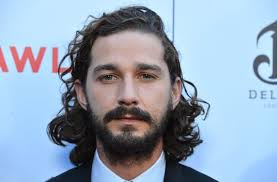
Shia LaBeouf

I honestly have lost track of what the hell is going on here. LaBeouf plagiarises Daniel Clowes, and later apologises, but then it turns out his plagiarism apology was plagiarisedat some point there was an apology written in the skythen they go back that he had plagiarised an email about his father and what it meant to be a man, then he retires from public life, then people are so confused they think maybe the whole thing is performance art, and then Shia agrees that -yeah, it’s performance art, and he plagiarises his explanation of plagiarism as performance art, and by now he’s a meme (because everything will eventually be a meme).
Among all of this ranting and confusion LaBeouf has offered up the explanation that there is no artist, there is only the art, that all art is plagiarism, that authorship is censorship, and other meta-post-modernist theories that seem to have given him the justification for taking another person’s work and without credit passing it off as his own so that he might profit from it.
In that regard at least there needs to be a connection between the artist and the art, if not one of ownership then at least one of authorship. Once that connection exists then, as a consumer, I must be aware that my support of a work of art is support for its author, for its creator. Financial support certainly, but support beyond that also for the whole edifice of artistic expression, for the whole system that allows for people to survive, to thrive, as a reward purely for their capacity to create.

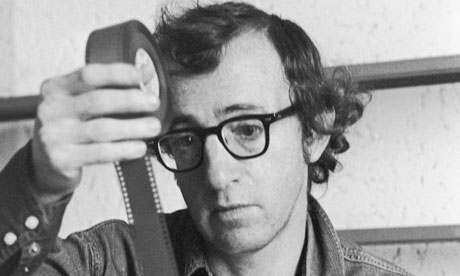
Woody Allen

And so to Woody Allen, who by any measure has thrived as a result of his Hollywood successes. He is in the midst of an award season that will honour him for a lifetime of creating art. 
The allegations he currently faces are not new, indeed they have passed the statute of limitations apparently by over a decade. When they were first made an investigation was undertaken which did not find enough evidence to continue. 
I know little of this case in its specifics, and that through the lens of media. Certainly I am not qualified or able to assign guilt or to suggest that I know the truth of the allegations.
I did read Dylan Farrow’s open letter though (here, with a reminder that it frankly discusses the abuse she alleges), and it was a difficult thing to read. I have not personally been the victim of sexual abuse, but I know victims, I have spoken with victims about their experiences and the feelings that arose from those experiences. I made enough of a connection between Farrow’s description in her open letter and the cases I know personally to form a storng personal opinion.  Enough to make me query the ethics of supporting Allen’s art.
Cate Blanchett and Alec Baldwin, both among those mentioned by name in the letter, have each spoken about this being a matter for the family, and not for outsiders. Allen himself has repeatedly in the past, and again in recent days, denied the accusations. Yet with Mia Farrow, and Dylan, and further tweets from Ronan Farrow (Dylan’s brother, Mia’s son – and possibly Woody’s) being made so publicly how can we as consumers be expected to remain clear of the situation? Either we discontinue support for Allen, on the basis of these allegations, or we continue to see his films – knowing that his profile in Hollywood brings Dylan further anguish –  in an act of either explicit or tacit support for him.
The ethics of this decision, and the ethics of Hollywood‘s decision(s) to either continue their awarding of Allen’s work or to distance themselves from the art created by a tainted artist,  are difficult. Ultimately they must decide if awarding his work, and him as the creator of that work, in any way endorses his character. I suspect it need not, but the realpolitik of the situation may not allow that cold rationalism to stand.

For myself, as a writer, I have no such dark skeletons in my closet as homophobia, plagiarism or sexual abuse allegations. I do though have strongly held political and social views. Many of these will have opponents who equally strongly hold their diametrically opposed views. This makes starting out as an writer feel sometimes fraught. I wonder will the art I create be assessed and enjoyed independently of me. I suspect that’s an easier thing to be assured in when you have no public profile, but we all now have the public profile of social media. I re-worked my name so that my writing would not be immediately obvious to a casual search of my name. I am strident in my views on my personal Facebook, but muted on Twitter where I try to maintain a more neutral and professional presence. I wonder if this self-censorship is even necessary. I wonder whether revealing my political beliefs will alienate potential readers.
Why this fear? Because I have experienced the phenomenon as a reader:

Some months ago I saw the twitter stream of an author I was considering reading (or at least adding to my long to-be-read list). I don’t remember the author’s name now. A few tweets was all it took to remove that author from my list of future reading, because I found that she supported many social-political view-points with which I disagreed.

Was I unfair in that? Should I have given the books a chance to speak for themselves without being coloured by my view of the author’s politics? Would I have read the books if I hadn’t seen that author’s personal views? Would I be disappointed if a potential reader was lost to my speaking out on an issue that I believed in.
In all three cases I am almost certain that the answer is yes, yet not for a moment have I regretted the decision I made.
The flip-side is likewise true; I have actively sought out the books of authors whom I have come to realise might share my interests and socio-political beliefs. For writers still seeking to make their way, to find their niche, to find their audience, I believe that there is an important lesson in that.


Reading: Short Stories 2014

Recently I set myself a goal to read 100 short stories this year. To record my progress toward that goal I’ll post here the stories I’ve read (with a link where appropriate) and a very short review of my immediate thoughts.

January:

“A Letter from Your Mother” by Sylvia Spruck Wrigley in Daily Science Fiction (DSF) was a good little flash fiction in epistolary form that used one voice to develop two well realised characters and the relationship between them.

“The night my Dad became English” by Joseph O’Connor in the Irish Independent was a reflective piece from a son to his father, which touched on issues of family, identity, nation-hood and those decisions we make in our lives which shape who we are to be.

“In the Dying Light, We Saw a Shape” by Jeremiah Tolbert in Lightspeed Magazine mixed a lot of stylistic and genre ingredients – some quite new, others a little cliched – into an interesting near-future sci-fi about our place in the universe.

“Apotheosis” by Rosamund Hodge in the Lightspeed Magazine was a Fantasy piece exploring the meaning of divinity and the role of the deity in societies. It had a number of imaginative elements in its world, and was stylistically like a parable or myth more so than a modern narrative.

“After the Trains Stopped” by J Kyle Turner in DSF was a great story about an Artificially Intelligent (and empathetic) factory.  It developed its central premise (and character) well, but for me its greatest strength was the creeping Horror element.

“The Next Generation” by Michael Adam Robson in DSF was a short sci-fi in the old-school sense of a scientist struggling with the moral implications of his invention. It runs along a relatively predictable path where the creation surpasses its creator, and the last line lays on the moral a little thick.

February:

“Baby Feet” by Rene Sears in DSF was a sci-fi invasion story told from an interesting perspective. I really engaged with the character and her circumstances. Unfortunately the ending came in thick lumps of expository dialogue.

“Saltcedars” by Shannon Peavey in DSF was an alternative world fantasy with an interesting central concept. The world was nicely built and the main character realised. It was well crafted and structured, right until the final sentence, which I think dropped with a clunk and robbed the ending of some of its power.

“Mermaid” by Jonathan Schneeweis in DSF was the second mermaid-related story I have read in the last few weeks, and I think the better of the two, despite – or perhaps because of – being less complex. There is some foreshadowing which is a little too obvious, but the turn in the narrative was good and the recurring motif of the counting of ribs was a nice way to tie it all together.

“The Seventeen Executions of Signore Don Vashta” by Peter M Ball in DSF was an excellent tale of an unlikely friendship between a man who would not stay dead and the man who was once his executioner. In the interests of full disclosure, I know Peter through a friend. The quality of this story though should speak for itself. The narrative voice is engaging and the development of the relationship between the characters very well handled.

“The Devil as a White Swan” by Jane Ormond in Machines Will Not Give Change (a print anthology produced by Cardigan Press) is a more Lit-fic flash fiction about a gift given by an insensitive man and the relationship break-up that precipitates. It’s a flash fiction piece, at about 500 words, and opens with a strong tone, but I found the first person subjective a little suffocating and the inner monologue was hard for me to relate to.

“21 Steps to Enlightenment (Minus One)” by LaShawn M. Wanak in Strange Horizons was a story about the ways we can change our lives. The central premise seemed initially to be quite limited, but Wanak took it into such interesting dimensions. The narrator, and the narrator’s mother, worked well together to give opposing perspectives on the phenomenon of the spiral staircases, and the style made palatable what might otherwise have been heavy-handed symbolism. It took me a few false starts, but I really enjoyed this one.

March:

“Inventory” by Carmen Maria Machado in Strange Horizons was amazing. The story is kinda NSFW, tracing the life of the narrator through her sexual encounters, but not graphic. Machado allows the back-story to come through gradually, seeping into the tale and growing – dare I say spreading – until it overwhelms. I sat a moment after reading this and just appreciated it. Really a great piece of writing.

“Walking Home” by Catherine Krahe in DSF had a well-realised protagonist whom it was easy to empathise with. The fantasy elements were minimal and had little direct influence on the plot, but there was a sense of the setting being second-world and the world building was revealed gradually to have depth and texture. It seemed to take a while to get going, and to end abruptly, but I enjoyed it.

“Litany of the Family Bean” by Gemma Files in Strange Horizons is not actually a short story, it being filed under poetry, but I include it here because it did feel as if it had narrative qualities and the setting and characters I found fascinating. The use of language early in the piece was evocative and drew me in. The shock value of the opening  fell away quickly, replaced by a curiosity which wasn’t quite sated. Always leave them wanting more, I suppose.

“How to Become a Robot” by A.Merc Rustad in Scigentasy used a variety of story-telling forms and techniques to assemble an interesting narrative which explored gender and identity and belonging. Strong characterization and surprisingly effective use of 1st and 2nd person shifts.
“Like Bread” by Patricia Russo in SQ Mag was character focused with a sense of otherworldliness. Interesting structure which allowed for foreshadowing and a building of tension/suspense.
“The Church of Asag” by Cameron Trost in SQ Ma was built on a good concept, with interesting use of setting. At times overly direct in exposition. Rushed/unsatisfying ending.
“Codename Delphi” by Linda Nagata in Lightspeed was Sci-Fi (ish). Near future with a focus on remote and drone warfare. Well structured and communicated the frenetic balancing act well. Simple, linear plot.
April :
“The Final Girl” by Shira Lipkin in Strange Horizons was a good meta-horror piece, reminiscent both of Freddy Kruger and Whedon’s Cabin.
A Very Old Man With Enormous Wings: A Tale For Childrenby Gabriel Garcia Marquez was just wonderful. Utterly wonderful.
“The Armies of Elfland” by Eileen Gunn and Michael Swanwick  in Lightspeed has a really fascinating opening, but then let’s fall away some of its most original images and concepts and almost – thankfully never entirely – reverts to familiar tropes. Some cliche moments drop in with a thud, but engaging and interesting throughout.
“Select Mode” by Mark Lawrence and available for free on his website provides a good example of Jorg’s voice and Lawrence’s style, and of the fusion of Fantasy and SciFi typical in his work.
“Alsiso” by KJ Bishop in Lightspeed was a narrative without a protagonist, unless a lexeme can be protagonist. Tracing the history of a word through elevation, deterioration, semantic shift and all manner of reclassifications and transmutations, the author gives an insight into an evolving culture that makes it’s way from foreign to familiar. Cleverly written and enjoyable to read.
May:
“Zombie” by Chuck Palahniuk in Playboy (link is sfw) was a thought provoking story of dissatisfaction and confusion. It wades full into the despair of modernity, lashes celebrity, consumerist culture, and yet finds some hope in modern hyper-connectivity. Written with a beautifully direct, conversationalist style.
“Abomination Rises of Filthy Wings” by Rachel Swirsky in Apex Magazine was a very difficult story to read. A trigger warning is given, with cause. Apparently written to show that a domestic/relationship revenge fantasy could be readable, the result is genuinely disturbing. The mix of sexual dominion and the domesticity of the violence was horrific, as was the brutality and contempt, unhidden behind a gossamer-thin veil of the supernatural. A compelling but difficult story: undeniably well-written but not enjoyable.
“A Tank Only Fears Four Things” by Seth Dickinson in Lightspeed was a good exploration of PTSD in some alt-history, alt-Earth that is disturbingly familiar and yet suffuses with novelty. The Russian ethnicity adds a sense of the other, but ultimately is tangential. The story never quite fulfills the promise of its title and opening line, undercutting the fantastic element for metaphor.
“Paperclips and Memories and Things That Won’t be Missed” by Caroline M Yoachim in Apex Magazine was a beautiful, touching story. At times almost horror, at times melancholy, at times strangely beatific. I keep wanting to use the word ‘haunting’, which would be accurate but rather trite.
“Schrödinger’s Outlaw” by Matthew W Baugh in DSF was a very short short. The opening paragraphs had a well set scene, conveyed economically and without the exposition seeming too lumpy. The protag’s voice was clear. From there it fell into a sadly predictable path. The most harmful thing, for me was that it fundamentally misunderstood its central premise. Schrödinger’s cat is not ‘dead or alive’, but ‘dead-and-alive’ – the whole paradox hinges on the superposition of two simultaneous, yet contradictory states. By then end this seemed a bad pun that went too far.
June:
“Mephisto” by Alan Baxter in DSF was a well-contained tale. Tight and lean.  Baxter uses the dichotomies well, the crowd’s adoration and the magician’s hatred in return. The showmanship and pretense serves well to orient and then disorient the reader. It’s a creeping horror, more apprehension than fear, really. Baxter shows his hand artfully at the end, the exposition delivered but not dropped upon the reader, revealed but not ruined.
“Days Like These” by Erica L Satifka in DSF was a good Sc-Fi concept well handled. The protagonist was vividly drawn, as was the world in which he lived. The uncertainty was maintained well throughout, and the reliability of the narrator gradually questioned.
It is more a back-handed compliment than a criticism to say that it left me wanting more, but the ending was a little dissatisfying.
“Anyway Angie” by Daniel Jose Older, published by Tor, was a case of a good character and great atmospheric prose. The first person worked, the characterization and exposition of back-story was smoothly given without chunks. I found my way to this via Kameron Hurley, whose novel I am reading. It shares a bug motif, which here is used effectively for horror. The story did feel dislocated though, perhaps I wanted it to be an excerpt of some larger work, or perhaps that balance of what the reader was given and what the reader had to infer was ever-so-slightly awry. A good story though. I’d read more.
“Trigger Warning Breakfast” was published in various places (I read it here). This anonymous story is a punch in the guts. Perhaps a webcomic, perhaps an illustrated narrative, it is told with short, stark sentences, crudely but effectively illustrated. A very powerful and personal piece.
July 
“Polynia” (available to read through Tor) is familiar in China Mieville’s oeuvre. Weird and fantastic, a London familiar and yet changed, the narrator slightly distant from their own narration, hints of politics, a cameo from a rail-road, clever wordplay, impressive prose. The vocabulary is accessible, the core concept visually arresting and ultimately unresolved. The changes in the world are accepted because there’s nothing else to do than to accept them.

 August 

“Selkie Stories are for Losers” appeared in Strange Horizons and was nominated for a Hugo Award. It is a mix of the modern working class domestic narrative and ancient myth/fairytale. It’s told cleverly, through narrative denial and breadcrumbs of exposition. At times the short segments felt a little too isolated from each other, and only in re-reading could they be more comfortably pieced together. That’s a minor quibble on a well told story though.

“The Turing Test” appeared in Lightspeed Magazine. I liked the subject matter, but to anyone with even a passing familiarity with the concept of the Turing Test the ‘twist’ was easily picked (perhaps at fault here is the title?), and the second part seemed unnecessary. The dialogue was very good, and the prose flowed smoothly. Didn’t seem to do very much with its length though.
“Resurrection Points” appeared in Strange Horizons and attracted deserved acclaim. It was beautifully written. An insight into my own world through a different lens. Terrifying in the banality of violence and death, and in the sense of hopelessness or inevitability. The ending was a touch bathetic, but that’s a minor quibble on an outstanding story.
“Stone Hunger” appeared in Clarkesworld. I struggled with this one early. It felt like I was flailing for meaning, no foundation to build on. The tense was a barrier for me. Once we were in the city though things got very good, very quickly. I loved many of the concepts, clashing powers as taste sensations, the stone-eater turned sentient statue, the city of monsters. Once into it, I really enjoyed it. Very descriptive and with a strong narrative voice.
September: 
“The Lady Astronaut of Mars” by Mary Robinette Kowal was published by Tor.com. It’s a beautiful story. An alt-history retro-futurist Sci-Fi. A return to a more classical Sci-Fi, where space faring and punch-card programmes and the mystery of Mars loomed large. It’s a story infused with dying and departing, concerned with what legacy each generation leaves to the next. As mid20thC sci-fi has left its legacy on this generation. An atypical protagonist – past middle-aged and female – is drawn with tender realism, and the difficulty of her dilemmas is frankly, honestly drawn. The ending ties the threads together in a satisfying, if somewhat convenient, solution.
“Wikihistory” was also from Tor.com. A clever little story told as a series of forum posts and dealing with tropes of time travel and determinism. It tests out Godwin’s Law, and presents us with an alternative view of cultural assumptions. The plot-premise is familiar, but this is a fresh approach.
“Enemy States” by Karin Lowachee was published by Apex (and part of their Military Sci-Fi anthology) It was an epistolary narrative, and frequently told in the second person. I found that it shifted in time in curious ways, sometimes in ways hard to follow.
It did have moments of beauty, both in terms of its attention to detail and in its prose. The central relationship was finely drawn, a romantic-tragedy set against the backdrop of an interstellar war.
“We are the Cloud” was an excellent story by Sam J Miller, published in Lightspeed. I really enjoyed it. A near-future sci-fi. The technology is plausible and integral and its significance mounts as the story progresses. The wounded, vulnerable protagonist is taken down some dark paths, and us with him, but he never loses our sympathy.
“Ten Rules for Being an Intergalactic Smuggler (The Successful Kind) was a story by Holly Black that also appeared in Lightspeed. I almost didn’t read it all. What a mistake that would have been.
I don’t generally like the 2nd person. I don’t generally like lists as narrative scaffolds (and Rule 1 annoyed me from the start). The exposition on several occasions came in thick dumps. This had so much going against it that I nearly bailed before the end of the second ‘rule’.
But for all of that the story turned me fully around. The characterization, the rich and deep world-building, the twisting plot, the moments of genuine emotion. This packs a lot into a story that could have been so much less. Excellent. This is the sort of story for which I undertook this project. This taught me a lot about being a better story teller.
“As Good as New” was in Tor.com, a story by Charlie Jane Anders. It’s a mash-up of apocalypse, genie wish cliche, and post-modernist theatre.
I’m at a bit of a loss for this. I don’t know how it worked so well, but it worked really, really well.
Wonderfully relatable protag. The ennui of a western millennial middle class. Patient plotting that allowed the story to meander pleasantly without ever getting lost.
October:
“Tomorrow is waiting” by Holli Mintzer appeared in Strange Horizons back in 2011. I only just found it and read it through some aggregator site (I forget which) listing good short stories about AI. This is a nice story about an AI muppet kind if accidentally achieving sentience. The writing is stark, quite bare of description, but it has warmth and a beating heart. Anji’s not a strong protag, but she’s relatable. The conflict leaks from the piece in the final third, but the effect of this is a positive ending note and a view of sentient AI which is optimistic, rather than fearful.
November:
“Brain, Brain, Brain” By Puneet Dutt appeared in Apex. It’s a very cool little poem, clearly aware of tropes and prepared to flirt with them before twisting to the zombie POV. The imploring insistence of ‘we’re not the bad guys.’

Some beautiful use of language.
2013

Well, this year is about wrapped up, and as is the want of the season I figured I’d take a look back and see if I could somehow parse some meaning from all of those events that occurred:

Best Books:

I read some excellent books this year.
Noteworthy was Joe Abercrombie’s ‘Red Country‘, which was much anticipated and lived up to lofty expectations. I really liked the returning characters and the new ones even more so, and Joe’s continuing breadth of hybridised genres remained an invigorating force on my appreciation of modern Fantasy writing.
I also read several of Chuck Wendig’s books. You might have noticed I referenced him repeatedly this year on the blog, and with good cause. I ‘discovered’ his writing through the terribleminds website and his advice to writers, and I’m glad that this led me to his fiction. The Miriam Black books were great. His Corn-Punk YA and Atlanta Burns stories were good excursions into a genre I don’t read enough of, and Blue Blazes was great. I still have a special place for the first of his books that I read though, the tales of Coburn, a vampire who wakes up in the zombie apocalypse and must become a shepherd to his ‘sheeple’

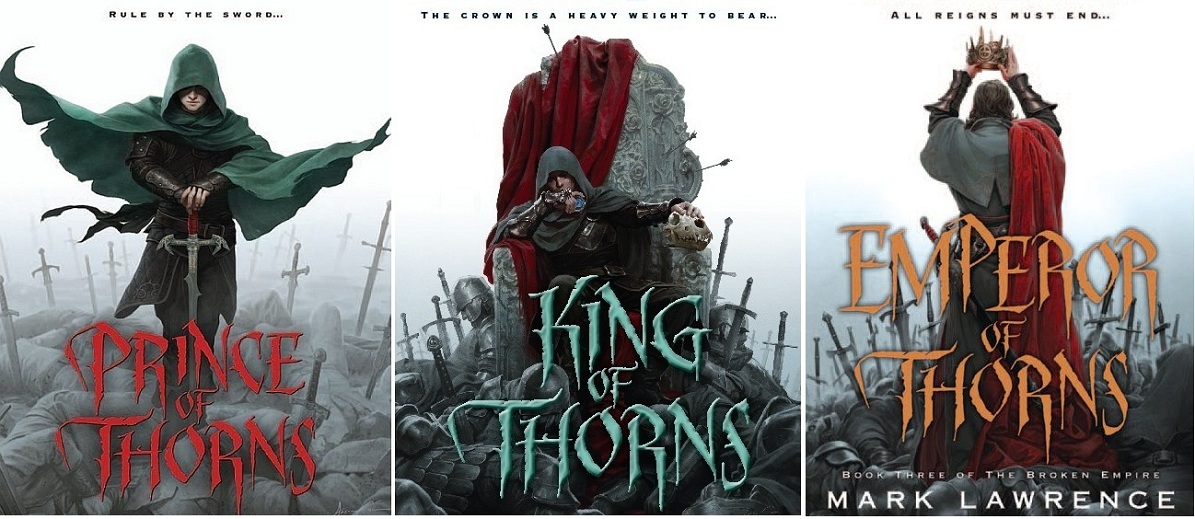
Against this stiff competition though rose Mark Lawrence’s trilogy (Prince, King, Emperor of Thorns). It has caused some controversy in some circles but I didn’t find the protagonist as shocking or evil as some of the criticism would suggest. He wasn’t a good guy, but I think he was trying to be without really knowing how. In that sense he wasn’t so much different from other protagonists I’ve read. He was younger in book 1, but as the book progressed that feature became less pronounced, and given the images of teenage ‘soldiers’ coming out of Syria I had little problem accepting it. The world was interesting, but several queries regarding technology level and such went unanswered. I would happily recommend them and look forward to reading Lawrence’s future works.

Best Graphic Novel:

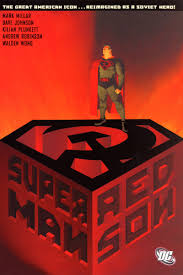
It’s a small field, as I don’t read too many, but I did finally get around to reading “Red Son”. I’m not really a fan of DC and certainly not of Superman who I think tends to fascistic fantasies of control, or to some infantile desire to be protected and guided by a greater being. I was interested in how the Superman mythos would play out against the Soviet political ideals, and while ‘Red Son’ touched on this paradox it went largely unexplored. In the end I felt that the Red Son Superman was still an American, transplanted into Russia, rather than a full exploration of what a Soviet Superman would truly mean. It was an interesting and thought-provoking read though.

Best Film:

Surprisingly few real contenders here. I saw many of the big ‘tent-pole’ movies and usually came away with mild disappoint. ‘Elysium’ didn’t live up to its aesthetic and tried to sledgehammer me with a political message. ‘Into Darkness’ was silly, burdened by fan-service and more spectacle than substance. ‘Iron Man 3’ had some good sequences but seemed to lose the sense of character. ‘Man of Steel’ did a wonderful job of setting up and re-imagining a familiar origin story, but the Krypton scenes were unnecessary, the whole final act was terrible and Snyder’s misogyny kept rearing up ugly. ‘World War Z’, again, sacrificed story to spectacle. ‘Desolation of Smaug’ looked amazing but was weighed down under its own attempts to be an epic far beyond the proportions of its source material. ‘Pacific Rim’ had awesome robots and kaiju… and that is all. ‘Django Unchained’ was disappointing – particularly in the manner by which it relegated its eponymous character to secondary and tertiary roles when Waltz and DiCaprio were on-screen.

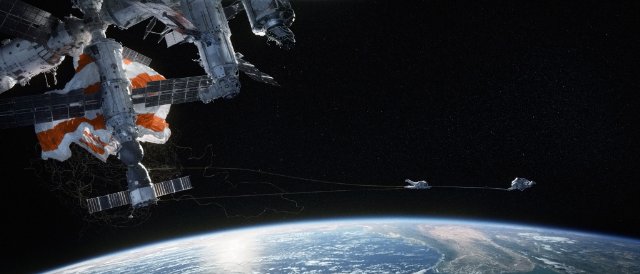
I think therefore that ‘Gravity’ gets the nod. Sure there were problems, as Neil DeGrasse Tyson pointed out, but it was a great experience. I saw it in IMAX 3D and it was beautifully immersive. I love Cuarón’s long tracking shots and the film’s opening was a wonderful example of how the technique can be well used.

(Special mention to ‘Wreck-it Ralph’ for being an absolutely awesome movie to watch with the kids).

Best Event:

Two great events for me this year as a writer.

Firstly, Genrecon 2013 gave me the opportunity again to meet so many other writers in such a diverse range of specialities, and at different stages in the auctorial development. The panels and workshops were excellent, the community supportive and inclusive, the international guests warm and engaging, the banquet after-party sufficiently well lubricated.

Secondly, I saw George RR Martin and Michelle Fairley in conversation, hosted by the Wheeler’s Centre in a side-show to their Supernova commitments. Michelle was wonderfully entertaining and forthright. GRRM went over some adages with which I was already familiar – it must be tremendously difficult to answer the same questions in new ways – but also added some interesting insights into his process and the story thus far (such as his being uncertain that Bronn would even survive the Eyrie, only to watch as the character became important as a sounding-board for Tyrion, and then important in his own right).

Writing:

I have taken some strides here too, but not as many as I had hoped. I’m much more organised with my submissions tracking spreadsheet and a good list of potential markets to explore (thanks in particular to Peter Ball and Alan Baxter); I pitched my novel MS again and felt a lot more confident and assured in doing so; I have five finished short-stories this year, for a total of about 30,000 words.

I am not unhappy with that, given all of the external pressures on my time, but I want to increase that figure. Alan Baxter estimated himself as having completed over 250,000 words this year and Chuck Wendig has something like 600,000. Chuck’s a full-time pen-monkey, but he has a toddler and I am sure many of the same concerns and excuses that I do, so I’m not going to point at any of those as a way out, I’m just going to look at my 30,000 or so, nod, and acknowledge that I could do more.

2014:

Goals then?

  • To write over 50,000 words in 2014. For those not good on the maths, that’s about 1,000 a week. 200 words a day x 5 days a week. That looks do-able.
  • To have completed 6 short stories. That’s one every 2 months. I’ll need to do this and more to hit the 50,000, so hopefully this is a goal I can meet and exceed.
  • Reading 10 novels. That’s about one very 5 weeks, and I suspect this will be the tough one., because I want to hit this goal without including the reading I have to do for work, but perhaps the work reading will have to contribute.
  • Reading 100 short stories. That’s 2 a week, and I think this is an achievable one. I’ve subscribed to Daily Science Fiction, so even if I just read all of them I will be fine, but I’ll get subscriptions to a few other mags as well so that there’ll be the variety. I’m also reading Raymond Chandler’s short stories for work. I may or may not include these toward my goal.
  • Blogging. 1 post a month, at least, and I ambitiously hope to get one up every fortnight.

So there you have it: 2013 tucked into the past and a clear guiding line through 2014. Thanks for following and being a part of it. I appreciate that there is some sense of an audience out there and it helps me to stay motivated knowing that there are readers waiting.

Happy New Year to you all. Hope it’s been a good ’13 and a great ’14 ahead.


Equality, Diversity and Appropriation

Recently (actually about a month ago) Joss Whedon spoke at an Equality Now function. In some circles this was lauded (Jezebel called it perfect), others were less certain (such as The Mary Sue), and many were downright critical. I don’t want to down-play the importance of the feminist discussion, and we should all recognise just how problematic is the depiction of women in genre fiction and genre fandom. (If you don’t, try scrolling through the images here, many of which are drawn from Whedon’s own work).

I am a Whedon fan, but not a full Whedonite. I loved Buffy and Angel. I loved Firefly. Dollhouse, not so much. Serenity was ok. Cabin in the Woods was clever but problematic in many ways, not the least of which was that in its knowing parody of sexist horror tropes it conformed to all of the sexist horror (as explained brilliantly by Kirstyn McDermott). But I digress. With no disrespect to the importance of the feminist discussion,  an article by Clem Bastow got me thinking about Orientalism, another aspect of equality that genre fiction needs to confront.

Rebecca Brown’s essay on Orientalism in Firefly/Serenity gives a great outline for what Whedon has done in drawing on Oriental aesthetics and culture, but what he has not done is drawn into stark focus by Mike Le. A future culture in which Western and Oriental language, fashion and philosophy is blended, but no one exists who is of Asian appearance? Le rightly asks if such a gendered world could have been made – a world of male and female cultural equality – without female characters. I suspect not. I am certain, not.

I was reminded of Richard Morgan’s future/noir novels in which Takeshi Kovacs is protagonist. The character is explicitly located as being culturally Japanese/Slavic (and fiercely pedantic of the pronunciation of his name: Koh-vach). For all sorts of reasons related to the technologies available in Takeshi’s world the physical appearance of the character is less relevant than you might assume, but this is the internet’s #1 image of him:

And here he is on a book cover:

That’s some obvious white-washing, and even if we give Kovacs a re-sleeving pass, there’s plenty more examples of Asian characters being white-washed, or erased, or presented in yellow-face. I could go all the way back to Mr. Yunioshi, or David Carradine in ‘Kung Fu’but unlike black-face, this is not some embarrassing relic of the past. Tom Cruise as the ‘Last Samurai’, Keanu as the main one of ’47 Ronin’, 2010’s all-caucasian ‘Last Airbender’, 2012’s ‘Cloud Atlas’, even ‘Pacific Rim’ cast Clifton Collins Jnr as Tendo Choi.

On his blog over the past months Alan Baxter had guest posts from people discussing their early inspirations in genre fiction. The post by Thoraiya Dyer on the Feist/Wurts ‘Empire trilogy’ struck a cord with me because I too read and greatly enjoyed those books. For me they were one of the first examples – perhaps the first example outside of folk stories and mythoilogies – of Fantasy from a Non-Anglo perspective. Much as with ‘Dune’, which I also read as a teen, I was fascinated by the different culture, the different way of life, that was presented.

Mara of the Acoma is a young woman, powerless by the regular measures of the genre. She is no warrior, no adept of magic, has no divinely assured destiny. She is unprepared fro the challenges she faces but survives and overcomes them by the force of her agency and wits. Here she is on the cover:

That's her there, the white-chick dressed in white with blonde hair

That’s her there, the white-chick dressed in white with blonde hair


Never mind that Mara is obviously described as dark-haired. Never mind that the buildings of her world are more rice-paper screens than towering spires of marble. Never mind that she really has no use for a sword. And yes, the civilising white saviour comes in later to show her how much better things could be if only her culture were whiter and more European, but until that point the books did an excellent job of introducing me, and apparently Thoraiya, and I’m sure many other readers, to new cultural influences on Fantasy. I sure do hate the character of Kevin, but that’s a discussion for another day.

Paul Atreides is the privileged white male, but he  only comes into his power when he leaves that world. Re-reading ‘Dune’ recently I was struck by how my younger self had missed the obvious parable: when a technologically superior force invades a desert to extract from it the natural resources required to maintain their technologies,  the native inhabitants look to a religious leader to mount a rebellion against their oppressors. Again – Paul is the white saviour, giving the Fremen a leader that couldn’t have come from within, but still, this was the 70s.

Forward to today and I am reading Mazarkis Williams’ first novel, clearly set in an Orientalist culture. I am not far into the novel, so I won’t comment further, but it is still difficult to see this culture as anything but the Other. Perhaps that is for me as a reader to overcome.

My own writing draws on the culture I see in the streets and workplaces where I live, in my friends and the friends of my family, in the public spaces I frequent, but my novel, especially in its earliest drafts, was set in the pseudo-Euro tropes of lazy Fantasy. As a young writer one tends to reproduce what one has read. As Neil Gaiman says, “Most of us only find our own voices after we’ve sounded like a lot of other people.”

I think the question that fascinates me here is when writers can draw upon cultures of the Other to add to their world (as I believe Morgan did with the Kovacs novels), and when does it become white privilege mining other cultures and appropriating elements that then become stereotypes?

I don’t have the answer, but much as with good art – I feel that I know it when I see it.