Good v Evil

To prepare for the upcoming World Fantasy Convention, Damien Walter recently penned an article on modern Fantasy in which he noted that the genre has changed since Tolkien was writing (nearly 60 years ago).

While exploring this utterly unremarkable idea Walter managed to make a few comments which  momentarily swept across the plains of social media, being widely condemned. I suspect some of that criticism was born of a defensive reflex ingrained into sci-fi/fantasy readers since high school and reinforced by those who continue to dismiss or demean genre fiction.  In other cases the criticism seemed to me to be a genuine misreading, or misunderstanding, of Walter’s point. I suspect he sees his article as being a largely sympathetic treatment of Fantasy and its audience. This is not how it was received, I think for two reasons.

1. The changing nature of the battle(s) between good and evil.

Walter says “It would be very easy to assume those books are just generic copies of The Lord of the Rings, cashing in on the apparently endless thirst for Tolkienesque fantasy…” and though he goes on to suggest that there is more to the genre now than such an assumption would allow, the damage is done.
Why is that the ‘easy’ assumption to make?
Do we assume of any other genre that it is merely reproducing the works of a seminal author half-a-century after that author’s success?
Do we assume modern Sci-Fi is just repeated re-workings of Asimov? That modern crime is merely derivative copies of Agatha Christie?

For Walter to make that assumption so easily, or even to acknowledge that others will, reinforces the negative perception of Fantasy that so many modern Fantasy writers have worked so hard to change. This attitude recurs in the following paragraph, where in celebrating Vance, Leiber, Moorcock and Gemmell, Walter says that their “remarkable novels… belie their origins in pulp fiction.” Here then is that condescending arrogance that ruffles the feathers of so many readers who are sick of being told that their preferred reading is somehow lesser, that Fantasy is (ironically) ‘unremarkable’.

Referring then to the successful authors of modern Fantasy (Abercrombie, Lawrence, Brent Weeks) he uses that lazy and ill-defined pejorative Grimdark. I have discussed the term before, as have others more qualified to comment than myself.

Walter claims that “while it claims greater moral complexity, grimdark fantasy frequently offers a disappointingly one-dimensional portrayal of the battle between good and evil, where evil usually wins because it is the only game in town.”
Nonsense.

What Walter fails to recognise is that the characters and worlds of Abercrombie and Lawrence (I haven’t read Weeks, yet) are far from mono-dimensional. Even to make that suggestion calls into doubt his knowledge of the authors he has named.
He then goes on to misdiagnose how the treatment of concepts of good and evil has changed.

Tolkien had a simple view of good and evil. A good race, or rather an alliance of good (white) races…
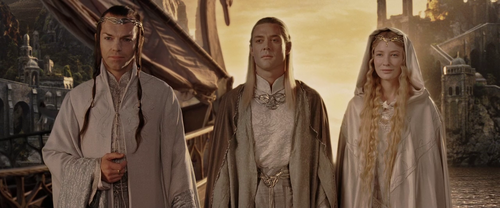
 have to defend their homes from an encroaching menace: the evil (dark) races.
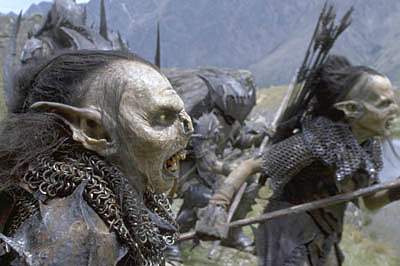
By this world-view the enemy is utterly defeated when the leader is defeated. The battle between good and evil is fought between an army of each, with battle lines drawn, to the death. This is perhaps a view to be expected from a man who had experienced trench warfare; who had returned from the hell of chemical weapons to the bucolic surrounds of English pastoralism; who had seen all the power of industry turned to the destructive effort of war, and thus rejected industry as being itself destructive.

How could we, the modern readers, share this view? We are now more than a decade into the War on Terror. We have witnessed the fall of Sadaam, the killing of Bin Laden, Gaddafi murdered in a ditch by revolutionaries. We have seen Egypt fall and rise and fall again. Seen tyrants overthrown and replaced by corruption or chaos, have seen the empires of democracy spying on their own citizens. I cannot see a world in which good gathers its (white) people to its cause to defeat the encroaching evil (black) people. But that doesn’t mean that good and evil no longer battle.

Modern Fantasy does not show a world where evil is the ‘only game in town’. It shows a world in which the battle between good and evil takes place not between people, but within. Each character has good and evil within them, and each must allow that battle to be fought. In some evil wins, but not in all. Interestingly, the protagonists are seen by others as evil, perhaps even acknowledge that evil in themselves, but wish they could be better. The characters we hope to see succeed, Logan, Glokta, Shy, and yes even Jorg and Monza, (and why not throw Jaime Lannister in for good measure?) believe themselves to bad, but hope that they can be better. (For Jorg that hope comes late, and slow, and even as it comes he resists it – because he’s not one to be pushed – but it is there).

Sometimes these characters don’t achieve ‘goodness’; sometimes they are trapped by circumstance or history or any number of other forces, just as some good characters are corrupted, unable to maintain their goodness in the face of circumstance.
I want Glokta to succeed because I want for him the same thing he wants for himself, it’s just that he has given up on achieving it, while I hold hope. I want Logen to find peace because I want to believe that men can redeem themselves of past misdeeds, especially when those misdeeds weren’t entirely voluntary. I want Jorg to be a better person, because he’s not a very good person.
This isn’t to say that the battle between good and evil doesn’t take place. Many such battles are taking place, fought by independent splinter cells and sleeper agents, the battle-lines ill-defined and constantly shifting.

Which brings us to…

2. Fantasy is not just for boys.

It’s frustrating that this even needs to be said, but for Walter the success of evil he believes defines Modern Fantasy “says more about the psyche of the young male readers and writers who dominate grimdark fantasy than anything else.”

This is just so wrong-headed that I can’t even bring myself to invest much energy in the debate.
On Goodreads, the 5 star reviews for ‘The Blade Itself‘ include reviews from Maria, Kat, Inara, Annie, Faye, Sara and many other female readers. Likewise for ‘Prince of Thorns‘ we find Amanda, Rose, Natalie, Georgia, in the top dozen or so.
I could go on, but really – why bother.
As to only young men writing Modern Fantasy…
Ursula LeGuin, Robin Hobb, Trudi Canavan, Marion Ziommer Bradley, Janny Wurts, Anne McCaffery… of course JK Rowling. These authors aren’t mentioned as Grimdark, but I wonder if that’s because of how subjectively applied is the label. I do know that from my own experience in Australia I have met many talented women writing Fantasy and Spec-Fic. I struggle to believe that they are the exception.


Genrecon 2013

Last weekend I went to Brisbane for the second annual Genrecon event.

It was my first time in Brisbane and the weather was perfect, just as the tourism board promises. Genrecon was set amongst the brutalist installations of the late 80s (Southbank was tidied up for Expo 88) and the cultural precinct was a great place to wander around nursing a coffee or a hangover.

Genrecon 2013 itself was, as 2012 had been, an amazing experience. Huge thanks to Peter Ball and Meg Vann and all the QWC ninjas for making it happen.

I came straight from the airport to the Opening Night Reception where I caught up with some of the 2012 veterans such as The Mercieca boys, Chris Andrews and others, and met several new and exciting young writers (like Chris White), editors, agents, publishers and genre-fiction lovers. Special mention here to the Romance writers,  some of whom I knew already, others of whom I met for the first time (such as Cathryn Hein, who was happy to talk footy with me). They were, universally, a pleasure to speak with.

On Saturday morning I made my pitch to Alex Adsett, agent extraordinaire. She was interested enough to request a partial, so I will be emailing that off this week. Having the pitch done early meant I could relax and enjoy the rest of the weekend.

Scott Baker‘s talk on book trailers was (although I missed the start while pitching) a fascinating insight into how new or established authors can build a profile, or open themselves to a diversified market. His own example (for his novel The Rule of Knowledge was excellent. “It’s better to have no book trailer, than to have a bad book trailer.”

Patrick O’Duffy, Kate Cuthbert and Kim Wilkins dragged the workshop on mixing genre into the realm of Dino-erotica, complete with role play. “It’s easier to market a story that is at the centre of an established genre, but that’s not (an author’s) job. Just write the damn book and let the marketing department decide how to sell it.”

The conversation event with John Connolly was fantastic. He’s such a witty and entertaining speaker and shared a lot of wisdom about persistence, effort, professionalism and the need to finish things. “You will always be an amateur if you don’t finish things.”

The Kimonos and Cutlasses Dinner was great. Chuck Wendig gave a live action rendition of his famous “25 lists”. This time ’25 Reasons Why I Fucking Love Genre Fiction”, and followed that up with an interview with Kate Cuthbert that had the room in great spirits. Special mention here to the lovely Denise Rosetti, whom I met at GC 2012, an Erotic Romance writer who has been wonderfully generous with tips on writing craft and the publishing industry.

The post-dinner party was a great night. A chance to debate the relative merits of Kirk and Pickard with Kate Cuthbert (she for Pickard, me arguing for Kirk. Something surely must be said for romancing the unfettered masculine, rather than the dignified and refined. I saw Picard as too staid and paternal. She saw him differently. I think we decided on the terminology ‘Gent in the street/Beast in the bed’).
Later I had the chance to have a few drinks with Scott and John. Here I am then, a young writer, finding his way into the industry, sat at a table with an international best-seller and someone who helped create the Hobbit films… I probably didn’t take full advantage of that, but it was a great conversation. I won’t reproduce it here, but after those trapped in the elevator (including the lovely Gemma Smith) escaped we turned our musing toward cannibalism, and I think that raised the tone.

Sunday began with an almighty hangover, but I made it to the Leanpub presentation, which gave a very interesting history of genre fictions origins in Dickensian serials. Alex gave an insight into the business of being a writer and what to look for in publishing contracts, and Anita Heiss told some hard truths about sales, genre, and finding a niche.

One of the absolute highlights was Charlotte Nash and Rebekah Turner‘s workshop on Action films. Die Hard, Terminator, Aliens, Predator, Speed and The Matrix, all used to show universal truths about how Character, Conflict and Context can be used to tell a compelling narrative.  “You need to give the characters authentic reasons to act in character. There has to be a reason in the context for the characters to act as they do.”

The panel on antagonists gave Chuck and PM Newton a chance to get side-tracked by The Wire and discussing the various ways in which McNulty, Stringer, Barksdale and Marlo were mutual antagonists, and Omar was everyone’s antagonist. Interestingly the discussion turned to the dearth of female antagonists, and it seemed that when they were present it was often opposite female protagonists or as the face of some larger systemic antagonism. “A good antagonist is the hero of his own story.”

And a wonderful event ended with a debate over whether “Genre just wants to have fun,” and despite the best efforts of John “Paris” Birmingham and his impassioned call for the negative team to stop hating life, it was Scott Baker’s reworking of Poe’s ‘The Raven’ that won the day.

Next Genrecon is 2015. I cannot recommend it highly enough. The genre writing community is so supportive and the whole event was so inspiring. There is a diverse range of perspectives, from Horror, to Romance, to Crime, to Sci-Fi, to Fantasy; novelists, short story writers… all sorts. And my people.
Any room where you can get cheered for knowing the significance of LV-426 is my kind of room!


‘The Rook’ Review

(Continuing my re-posting of reviews I have written and previously published elsewhere. Here is my review from last year on Daniel O’Malley’s debut novel)

In the interests of full disclosure I received a free copy of ‘The Rook’ in a greeting bag at Genrecon Australia last year. Every attendee received a book, randomly, from a selection of books by panellists at the con. I got lucky.

This is modern Urban Fantasy with a healthy sprinkling of absurdist humour.

O’Malley gives us a protagonist as unaware of her world as we readers are, having woken up in a park, surrounded by gloved corpses, with no memory, and a letter in her pocket.

“Dear you,

The body you are wearing used to be mine…” And so we begin.

The technique here is to have a narrative in which a series of letters from Myfanwy Thomas provide back-story and exposition, while we follow our amnesiac heroine (and newly made Myfanwy Thomas)as she discovers the strange world into which she has awoken.

And what a strange world it is: a

  •  secret government agency (The Checquey) with super-powered agents combat m

anifestations of the weird, the malevolent and the unusual to keep safe an unwitting British public. The hierarchy of The Checquey borrows heavily from the chessboard, and in this hierarchy Thomas is a Rook. She also discovers that the previous Rook Thomas has been betrayed, by a colleague, and so can trust no one.

O’Malley does a great job of balancing the different strands of the story he tells: The becoming of the new Rook Thomas, the mystery of the betrayer, the conflict with The Checquey’s old enemy. He is also adept at introducing fresh concepts (a multi-bodied consciousness, a restless contortionist, crazed Belgian flesh-sculptors), while giving new life to hoary clichés (A vampire, an amnesiac, a dragon), and keeping everything from taking itself to seriously (with lashings of goo, prognosticating ducks and unintelligible Japanese bodyguards in tartan).

It was certainly a page-turner. Despite it not being a great time for me to be reading at the moment the book kept drawing me back, and I became invested in the characters, particularly the two Myfanwies Thomas, who are well fleshed out and nuanced.

Recommended Reading

(Spoilery critical detail below. Proceed with caution…)

.

.

.

.

.

.

.

There was a lot to take in early in the novel, and at times this necessitated info-dumps.  Particularly in the introduction of so many characters so rapidly, it was hard to distinguish the primaries from the secondaries and tertiaries, and so the reader is left trying to store a series of names, connection, descriptions, super-powers, etc… without any real organic introductions. Of course the letters and folder explain all this but…

The technique of having the letters was effective early, when they were short interludes – a page or so at most – but as the letters got longer (whole chapters) I felt they dragged down the pacing of the main narrative. This was especially true in the third act as the new Thomas was coming fully into her power and meeting high stakes, and the shift of gear to the old Thomas’ reminiscences was jarring. I also found at times the coincidence of the letters providing just the salient information at just the right moment was, while necessary, a strain on credulity. I can accept characters who can turn their skin to steel, or who can emit tear gas from their skin, but I struggled to understand why the new Thomas wouldn’t read everything in detail as soon as she could, rather than apparently choosing the letters fortuitously over the course of weeks. I do understand the need for it to be so, but it is perhaps a weakness of the structure that it was.

I really liked the ending, the slight miscalculation of time-frame destroys so many well-laid plans, and if it does all come together a little too neatly (centuries of enmity were put aside a little too quickly, a little too easily) I was prepared to accept it because I like Rook Thomas and was hoping she would succeed.

I was initially a bit sceptical of how the humour would be used, but O’Malley handled it quite well I thought: absurd without being stupid, off-beat without resorting to desperate wackiness.  The fate of the duck was a particular highpoint (though I felt that that chapter should have come earlier, being that it was a long(ish) letter and I just wanted to get back to the main narrative where the new Thomas was imperilled).

All said I enjoyed the book and it drew me in, I came to care about the main character and wanted to keep reading to see her succeed. What better measure of success for an author than to affect a reader so?

I look forward to the rumoured sequel gestating away in O’Malley’s mind. He sure does have some interesting places to go.


The City & The City Review

I’ve decided to shift some reviews I wrote on another blog and have them up here as well. The first of those is of Miéville’s “The City & The City”, which I read last April. More to come.
(Minor warning on the potential for spoilers, but I think I’ve avoided any obvious ones).

China Miéville has always been an author with an ambiguous relationship to genre. He is often to be found in the Fantasy sections of the bookstore (where they still have bookstores), but this isn’t an exact fit. (His most famous ‘Fantasy’ novel – “Perdido St Station” – has a scientist as its protagonist.) He is also an author far more comfortable with urban environments than the bucolic pastoralism of more traditional Epic Fantasy (in the Tolkein tradition). The first question one may ask of “The City & The City” is then which genre it belongs to. It’s an answer I’m not sure I can give.

The title refers to Beszal and Ul Qoma, cities which, for reasons never fully explored or explained, share the same physical space. These two separate political, judicial and social entities overlap and intersect each other, the citizenry of each share physical spaces, streets, parks, weather, even traffic, but they are distinct. They have different laws, authorities, governments, bureaucracies, airports… To call a house physically next door but existentially in the other city would require international calling codes. To pass from one to the other requires a passport and visa. Through an ingrained psychological process of ‘unseeing’ they have learnt to disregard each other and the city they should not be in. This ‘unseeing’ is enforced by the mysterious power of ‘Breach’, but presents obvious difficulties for tourists and the foreign academics coming to study the unique archaeology of the area.  In this element you might suggest that “The City & The City” is a Fantasy, but the label doesn’t really fit. Both Beszal and Ul Qoma are very definitely in our world, even if it is an alternative version. They are located somewhere in Eastern Europe, or perhaps the Balkans, and interact with neighbours as well as with Canada and the US. While the setting feels fantastical there’re no definite indications that the separation between Beszal and Ul Qoma is anything other than a human social construct. Some technologies exist which seem difficult to understand, but whether this is Science-Fiction or Futurism is again ambiguous.

Being a China Miéville novel there is inevitably a political aspect to the sociology of these cities. Both Beszal and Ul Qoma have Nationalists who are prepared to fight to keep their city separate from its spatial twin. Likewise there are Unificationists fermenting a rebellion that will see Besz and Ul Qoma made one. Economically, and in terms of foreign policy, the two cities are diverging and the influence of extra-national forces is felt by both populations. Readers of Political Thrillers will be familiar with the subplots of multi-national corporations and foreign ambassadors. Miéville is explicit in denying that this is a simple allegory of any existing or historical city (Borlú specifically states that this is not like Jerusalem or Berlin), nor is this an easy dichotomy of Capitalism/Communism or East/West. More than political allegory the division between the distinct citizens is a metaphor for almost any major city in the modern world, where our physical space is distinct from our social space, and where we may live next to the same person for decades without having a conversation, but have a close relationship with someone who lives suburbs away. In this way Miéville’s metaphor seems to be for the manner of modern urban socialisation, though he actively discourages any limited reading of meaning in the text.

At its heart though “The City & The City” is a detective story in a highly unusual setting. The narrative follows the investigation of Inspector Borlú of the Beszian Extreme Crime Squad. A body has been found dumped: a Jane Doe. Quickly Borlú’s investigation begins to hint at a larger conspiracy. Mysterious and anonymous tip-offs are phoned in, slim leads are followed, forensic tests are done on the body. In many ways the narrative has all the features of Crime Fiction, perhaps with a Noir element. Borlú runs in to the jurisdictional problems which are a familiar trope of this genre, but with significantly different challenges. His investigation uncovers more possible victims, and perhaps evidence that would call in the absolute powers of Breach. Borlú’s own understanding of his world, his city, Ul Qoma and the unique relationship they share is challenged, and the novel invites you to keep turning pages as the narrative twists and reverses and opens up to an extraordinary denouement.

Miéville channels the earlier Detective SciFi of Philip K Dick, the political fear of George Orwell, the hard-boiled detective of Raymond Chandler, and the Noir imagery of “The Third Man”. Although the publishers (and The Times) make a comparison to Kafka this is not absurdism. The concept of Beszal and Ul Qoma seem surreal, but it is really an exaggeration: a hyperbole of our border jurisdictions and the real examples we can find in places such as StansteadCoolangatta, or  Baarle-Hertog.

Miéville is an obviously intelligent writer, and though his vocabulary here is far more accessible than in some of his other work, his ideas and imagination are evidence of this great intelligence. In lesser hands the conceit of this setting would be fragile, or slippery, of overwhelming. In “The City & The City” it is none of these things. Miéville handles the subject matter with confident assurance and never loses control of the beast he has created. The narrative itself is weaker and at times takes a second place to the setting, and the characters, while well drawn, are simplistic.

His greatest ability though is to present us with the utterly implausible and make us believe it. He brings us along with him as we tour the streets of the preposterous cities, and we go along without objection, accepting and enjoying the world as he gives it to us.

Highly Recommended


Weddings, Beheadings and narrative risk

(Warning that the following post contains spoilers for the Game of Thrones TV series up to episode 9 of Season 3, and for the Song of Ice and Fire novels up to the equivalent events)

The HBO, Benioff/Weiss, adaptation of George Martin’s books reached the pivotal moment known to readers of the series as The Red Wedding… and the internet went into meltdown.

In my house I approached the ‘Rains of Castermere’ episode with anticipation, which unfortunately gave my wife (a viewer who has not read the books) the misapprehension that this would be a joyful episode. That only compounded her reaction.

“How could you have been so excited?” she asked. “How could I have wanted so much to watch that episode, to have been looking forward to that wedding?”

They are legitimate, and difficult questions.

Most tellingly she asked why I didn’t warn her. But of course I couldn’t… could I? That would have been spoiling, and in truth part of what I was looking forward to was seeing her experience the Red Wedding for the first time. I wanted to see her reaction, unspoiled, to the twist. I wanted to re-live, vicariously, that moment of shock that I experienced as a reader several years ago.

In attempting to explain to her why I approached the episode as I did it occurred to me that, as a writer, I wanted to see how an unsuspecting audience reacted. I wanted to see just how George Martin’s narrative hand-grenade would go off in this adaptation. I wanted to watch as the writers brought to a close the stories they had set up, cut short the character development they had so invested in. I wanted to see  how they used Robb’s proposed march on Casterley Rock itself as the hide, from behind which they would fire the shots. Three quarters of the way through the episode, and knowing what was to come, I doubted anyone could have made the prediction of what would follow. That, of course, is its strength. That the audience is aware that some betrayal is possible, even that Frey might do something untoward, but that the totality of that betrayal was so unexpected.

The immediately available comparison is of course to the death of Ned in the first book (and season 1). I could not parse that moment in my first reading. All my knowledge of narrative, all my familiarity with genre, was attuned to imagining how Ned may be spared that fate, even how he might return even after that fate was enacted upon him. That beheading was a bold stroke (pun intended – sorry) and one which set Martin’s writing apart from his contemporaries long before people had started to throw ‘grimdark‘ around as either perjorative or descriptor. The Red Wedding re-establishes the brutal fact of Westerosi life – that anyone can die. Ned, Hand to the King, Warden of the North, betrayed and beheaded. His son Robb, King in the North, betrayed and beheaded. Who then is safe?

Other comparisons present themselves, most notably Janet Leigh’s demise in Psycho. Hitchcock murders the top-billed actress, a shining star of her generation of Hollywood, the protagonist of the narrative until the point of her fateful shower. Indeed, with her, he ends that narrative entirely, and shifts to the story of a damaged boy and his ‘mother’. These are not so much twists in a narrative, as they are narrative derailments. The story is not changed by these events, stories are ended, and new stories begun.

Compare this with other ‘shock’ deaths – Samuel L Jackson in that shark movie Deep Blue Sea, Marvin in Pulp Fiction, Sonny in Godfather. As much as these were unexpected twists, they didn’t alter the very fabric of the narrative in the way Martin has twice done. These deaths significantly alter the stories being told, they are essential plot events and disruptive, but Deep Blue Sea continues to be a story about people trying to avoid a killer shark (or something), Pulp Fiction remains a story about Jules and Vic, Godfather remains the tale of Don Corelone.
But when Marion Crane dies, the story of a woman embezzling from her boss dies with her. When Ned dies the story of an honest man investigating a mystery dies too. The new story that begins is of a civil war in which there are several claimants to the throne: ‘The War of the Five Kings’. Now, largely due to the Red Wedding, this story has ended, and a new one will begin which is not about rivals who all claim to be kings. That war is finished, the Starks have lost, and without them the result is an inevitability… or so it would seem.

The risk in this narrative technique is that you lose your audience. Martin has suggested that he had that response from some readers. My sister has spoken of throwing the book across the room, and not picking it up for a week. Twitter and Tumblr has shown that the risk is very real, perhaps more so, from a TV audience. But the reward for taking the risk is that the reader can never be certain, the threats the author levels at his characters are very real, and thus the narrative tension in the text remains effective.
Next time Joffrey raises his bow at Sansa… she really could die.
Next time Arya threatens the Hound… she might really go through with it.
Next time Tyrion goes into battle… he may end up with worse than a scar.
Is Varys safe? Is Cersei? Jon? Sam? Bran? Could even Dany be killed? If the King of the North and all his plans can be bled out on the Frey’s floor, we cannot assume anything.

And that is a great place for a writer to have his audience.