Category Archives: Musings

Good v Evil

To prepare for the upcoming World Fantasy Convention, Damien Walter recently penned an article on modern Fantasy in which he noted that the genre has changed since Tolkien was writing (nearly 60 years ago).

While exploring this utterly unremarkable idea Walter managed to make a few comments which  momentarily swept across the plains of social media, being widely condemned. I suspect some of that criticism was born of a defensive reflex ingrained into sci-fi/fantasy readers since high school and reinforced by those who continue to dismiss or demean genre fiction.  In other cases the criticism seemed to me to be a genuine misreading, or misunderstanding, of Walter’s point. I suspect he sees his article as being a largely sympathetic treatment of Fantasy and its audience. This is not how it was received, I think for two reasons.

1. The changing nature of the battle(s) between good and evil.

Walter says “It would be very easy to assume those books are just generic copies of The Lord of the Rings, cashing in on the apparently endless thirst for Tolkienesque fantasy…” and though he goes on to suggest that there is more to the genre now than such an assumption would allow, the damage is done.
Why is that the ‘easy’ assumption to make?
Do we assume of any other genre that it is merely reproducing the works of a seminal author half-a-century after that author’s success?
Do we assume modern Sci-Fi is just repeated re-workings of Asimov? That modern crime is merely derivative copies of Agatha Christie?

For Walter to make that assumption so easily, or even to acknowledge that others will, reinforces the negative perception of Fantasy that so many modern Fantasy writers have worked so hard to change. This attitude recurs in the following paragraph, where in celebrating Vance, Leiber, Moorcock and Gemmell, Walter says that their “remarkable novels… belie their origins in pulp fiction.” Here then is that condescending arrogance that ruffles the feathers of so many readers who are sick of being told that their preferred reading is somehow lesser, that Fantasy is (ironically) ‘unremarkable’.

Referring then to the successful authors of modern Fantasy (Abercrombie, Lawrence, Brent Weeks) he uses that lazy and ill-defined pejorative Grimdark. I have discussed the term before, as have others more qualified to comment than myself.

Walter claims that “while it claims greater moral complexity, grimdark fantasy frequently offers a disappointingly one-dimensional portrayal of the battle between good and evil, where evil usually wins because it is the only game in town.”
Nonsense.

What Walter fails to recognise is that the characters and worlds of Abercrombie and Lawrence (I haven’t read Weeks, yet) are far from mono-dimensional. Even to make that suggestion calls into doubt his knowledge of the authors he has named.
He then goes on to misdiagnose how the treatment of concepts of good and evil has changed.

Tolkien had a simple view of good and evil. A good race, or rather an alliance of good (white) races…
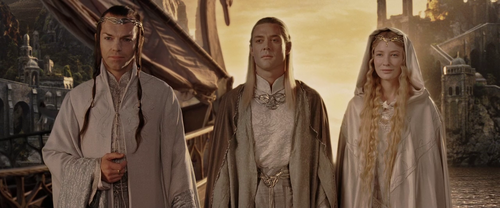
 have to defend their homes from an encroaching menace: the evil (dark) races.
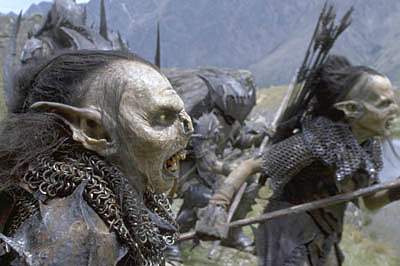
By this world-view the enemy is utterly defeated when the leader is defeated. The battle between good and evil is fought between an army of each, with battle lines drawn, to the death. This is perhaps a view to be expected from a man who had experienced trench warfare; who had returned from the hell of chemical weapons to the bucolic surrounds of English pastoralism; who had seen all the power of industry turned to the destructive effort of war, and thus rejected industry as being itself destructive.

How could we, the modern readers, share this view? We are now more than a decade into the War on Terror. We have witnessed the fall of Sadaam, the killing of Bin Laden, Gaddafi murdered in a ditch by revolutionaries. We have seen Egypt fall and rise and fall again. Seen tyrants overthrown and replaced by corruption or chaos, have seen the empires of democracy spying on their own citizens. I cannot see a world in which good gathers its (white) people to its cause to defeat the encroaching evil (black) people. But that doesn’t mean that good and evil no longer battle.

Modern Fantasy does not show a world where evil is the ‘only game in town’. It shows a world in which the battle between good and evil takes place not between people, but within. Each character has good and evil within them, and each must allow that battle to be fought. In some evil wins, but not in all. Interestingly, the protagonists are seen by others as evil, perhaps even acknowledge that evil in themselves, but wish they could be better. The characters we hope to see succeed, Logan, Glokta, Shy, and yes even Jorg and Monza, (and why not throw Jaime Lannister in for good measure?) believe themselves to bad, but hope that they can be better. (For Jorg that hope comes late, and slow, and even as it comes he resists it – because he’s not one to be pushed – but it is there).

Sometimes these characters don’t achieve ‘goodness’; sometimes they are trapped by circumstance or history or any number of other forces, just as some good characters are corrupted, unable to maintain their goodness in the face of circumstance.
I want Glokta to succeed because I want for him the same thing he wants for himself, it’s just that he has given up on achieving it, while I hold hope. I want Logen to find peace because I want to believe that men can redeem themselves of past misdeeds, especially when those misdeeds weren’t entirely voluntary. I want Jorg to be a better person, because he’s not a very good person.
This isn’t to say that the battle between good and evil doesn’t take place. Many such battles are taking place, fought by independent splinter cells and sleeper agents, the battle-lines ill-defined and constantly shifting.

Which brings us to…

2. Fantasy is not just for boys.

It’s frustrating that this even needs to be said, but for Walter the success of evil he believes defines Modern Fantasy “says more about the psyche of the young male readers and writers who dominate grimdark fantasy than anything else.”

This is just so wrong-headed that I can’t even bring myself to invest much energy in the debate.
On Goodreads, the 5 star reviews for ‘The Blade Itself‘ include reviews from Maria, Kat, Inara, Annie, Faye, Sara and many other female readers. Likewise for ‘Prince of Thorns‘ we find Amanda, Rose, Natalie, Georgia, in the top dozen or so.
I could go on, but really – why bother.
As to only young men writing Modern Fantasy…
Ursula LeGuin, Robin Hobb, Trudi Canavan, Marion Ziommer Bradley, Janny Wurts, Anne McCaffery… of course JK Rowling. These authors aren’t mentioned as Grimdark, but I wonder if that’s because of how subjectively applied is the label. I do know that from my own experience in Australia I have met many talented women writing Fantasy and Spec-Fic. I struggle to believe that they are the exception.


Genrecon 2013

Last weekend I went to Brisbane for the second annual Genrecon event.

It was my first time in Brisbane and the weather was perfect, just as the tourism board promises. Genrecon was set amongst the brutalist installations of the late 80s (Southbank was tidied up for Expo 88) and the cultural precinct was a great place to wander around nursing a coffee or a hangover.

Genrecon 2013 itself was, as 2012 had been, an amazing experience. Huge thanks to Peter Ball and Meg Vann and all the QWC ninjas for making it happen.

I came straight from the airport to the Opening Night Reception where I caught up with some of the 2012 veterans such as The Mercieca boys, Chris Andrews and others, and met several new and exciting young writers (like Chris White), editors, agents, publishers and genre-fiction lovers. Special mention here to the Romance writers,  some of whom I knew already, others of whom I met for the first time (such as Cathryn Hein, who was happy to talk footy with me). They were, universally, a pleasure to speak with.

On Saturday morning I made my pitch to Alex Adsett, agent extraordinaire. She was interested enough to request a partial, so I will be emailing that off this week. Having the pitch done early meant I could relax and enjoy the rest of the weekend.

Scott Baker‘s talk on book trailers was (although I missed the start while pitching) a fascinating insight into how new or established authors can build a profile, or open themselves to a diversified market. His own example (for his novel The Rule of Knowledge was excellent. “It’s better to have no book trailer, than to have a bad book trailer.”

Patrick O’Duffy, Kate Cuthbert and Kim Wilkins dragged the workshop on mixing genre into the realm of Dino-erotica, complete with role play. “It’s easier to market a story that is at the centre of an established genre, but that’s not (an author’s) job. Just write the damn book and let the marketing department decide how to sell it.”

The conversation event with John Connolly was fantastic. He’s such a witty and entertaining speaker and shared a lot of wisdom about persistence, effort, professionalism and the need to finish things. “You will always be an amateur if you don’t finish things.”

The Kimonos and Cutlasses Dinner was great. Chuck Wendig gave a live action rendition of his famous “25 lists”. This time ’25 Reasons Why I Fucking Love Genre Fiction”, and followed that up with an interview with Kate Cuthbert that had the room in great spirits. Special mention here to the lovely Denise Rosetti, whom I met at GC 2012, an Erotic Romance writer who has been wonderfully generous with tips on writing craft and the publishing industry.

The post-dinner party was a great night. A chance to debate the relative merits of Kirk and Pickard with Kate Cuthbert (she for Pickard, me arguing for Kirk. Something surely must be said for romancing the unfettered masculine, rather than the dignified and refined. I saw Picard as too staid and paternal. She saw him differently. I think we decided on the terminology ‘Gent in the street/Beast in the bed’).
Later I had the chance to have a few drinks with Scott and John. Here I am then, a young writer, finding his way into the industry, sat at a table with an international best-seller and someone who helped create the Hobbit films… I probably didn’t take full advantage of that, but it was a great conversation. I won’t reproduce it here, but after those trapped in the elevator (including the lovely Gemma Smith) escaped we turned our musing toward cannibalism, and I think that raised the tone.

Sunday began with an almighty hangover, but I made it to the Leanpub presentation, which gave a very interesting history of genre fictions origins in Dickensian serials. Alex gave an insight into the business of being a writer and what to look for in publishing contracts, and Anita Heiss told some hard truths about sales, genre, and finding a niche.

One of the absolute highlights was Charlotte Nash and Rebekah Turner‘s workshop on Action films. Die Hard, Terminator, Aliens, Predator, Speed and The Matrix, all used to show universal truths about how Character, Conflict and Context can be used to tell a compelling narrative.  “You need to give the characters authentic reasons to act in character. There has to be a reason in the context for the characters to act as they do.”

The panel on antagonists gave Chuck and PM Newton a chance to get side-tracked by The Wire and discussing the various ways in which McNulty, Stringer, Barksdale and Marlo were mutual antagonists, and Omar was everyone’s antagonist. Interestingly the discussion turned to the dearth of female antagonists, and it seemed that when they were present it was often opposite female protagonists or as the face of some larger systemic antagonism. “A good antagonist is the hero of his own story.”

And a wonderful event ended with a debate over whether “Genre just wants to have fun,” and despite the best efforts of John “Paris” Birmingham and his impassioned call for the negative team to stop hating life, it was Scott Baker’s reworking of Poe’s ‘The Raven’ that won the day.

Next Genrecon is 2015. I cannot recommend it highly enough. The genre writing community is so supportive and the whole event was so inspiring. There is a diverse range of perspectives, from Horror, to Romance, to Crime, to Sci-Fi, to Fantasy; novelists, short story writers… all sorts. And my people.
Any room where you can get cheered for knowing the significance of LV-426 is my kind of room!


Weddings, Beheadings and narrative risk

(Warning that the following post contains spoilers for the Game of Thrones TV series up to episode 9 of Season 3, and for the Song of Ice and Fire novels up to the equivalent events)

The HBO, Benioff/Weiss, adaptation of George Martin’s books reached the pivotal moment known to readers of the series as The Red Wedding… and the internet went into meltdown.

In my house I approached the ‘Rains of Castermere’ episode with anticipation, which unfortunately gave my wife (a viewer who has not read the books) the misapprehension that this would be a joyful episode. That only compounded her reaction.

“How could you have been so excited?” she asked. “How could I have wanted so much to watch that episode, to have been looking forward to that wedding?”

They are legitimate, and difficult questions.

Most tellingly she asked why I didn’t warn her. But of course I couldn’t… could I? That would have been spoiling, and in truth part of what I was looking forward to was seeing her experience the Red Wedding for the first time. I wanted to see her reaction, unspoiled, to the twist. I wanted to re-live, vicariously, that moment of shock that I experienced as a reader several years ago.

In attempting to explain to her why I approached the episode as I did it occurred to me that, as a writer, I wanted to see how an unsuspecting audience reacted. I wanted to see just how George Martin’s narrative hand-grenade would go off in this adaptation. I wanted to watch as the writers brought to a close the stories they had set up, cut short the character development they had so invested in. I wanted to see  how they used Robb’s proposed march on Casterley Rock itself as the hide, from behind which they would fire the shots. Three quarters of the way through the episode, and knowing what was to come, I doubted anyone could have made the prediction of what would follow. That, of course, is its strength. That the audience is aware that some betrayal is possible, even that Frey might do something untoward, but that the totality of that betrayal was so unexpected.

The immediately available comparison is of course to the death of Ned in the first book (and season 1). I could not parse that moment in my first reading. All my knowledge of narrative, all my familiarity with genre, was attuned to imagining how Ned may be spared that fate, even how he might return even after that fate was enacted upon him. That beheading was a bold stroke (pun intended – sorry) and one which set Martin’s writing apart from his contemporaries long before people had started to throw ‘grimdark‘ around as either perjorative or descriptor. The Red Wedding re-establishes the brutal fact of Westerosi life – that anyone can die. Ned, Hand to the King, Warden of the North, betrayed and beheaded. His son Robb, King in the North, betrayed and beheaded. Who then is safe?

Other comparisons present themselves, most notably Janet Leigh’s demise in Psycho. Hitchcock murders the top-billed actress, a shining star of her generation of Hollywood, the protagonist of the narrative until the point of her fateful shower. Indeed, with her, he ends that narrative entirely, and shifts to the story of a damaged boy and his ‘mother’. These are not so much twists in a narrative, as they are narrative derailments. The story is not changed by these events, stories are ended, and new stories begun.

Compare this with other ‘shock’ deaths – Samuel L Jackson in that shark movie Deep Blue Sea, Marvin in Pulp Fiction, Sonny in Godfather. As much as these were unexpected twists, they didn’t alter the very fabric of the narrative in the way Martin has twice done. These deaths significantly alter the stories being told, they are essential plot events and disruptive, but Deep Blue Sea continues to be a story about people trying to avoid a killer shark (or something), Pulp Fiction remains a story about Jules and Vic, Godfather remains the tale of Don Corelone.
But when Marion Crane dies, the story of a woman embezzling from her boss dies with her. When Ned dies the story of an honest man investigating a mystery dies too. The new story that begins is of a civil war in which there are several claimants to the throne: ‘The War of the Five Kings’. Now, largely due to the Red Wedding, this story has ended, and a new one will begin which is not about rivals who all claim to be kings. That war is finished, the Starks have lost, and without them the result is an inevitability… or so it would seem.

The risk in this narrative technique is that you lose your audience. Martin has suggested that he had that response from some readers. My sister has spoken of throwing the book across the room, and not picking it up for a week. Twitter and Tumblr has shown that the risk is very real, perhaps more so, from a TV audience. But the reward for taking the risk is that the reader can never be certain, the threats the author levels at his characters are very real, and thus the narrative tension in the text remains effective.
Next time Joffrey raises his bow at Sansa… she really could die.
Next time Arya threatens the Hound… she might really go through with it.
Next time Tyrion goes into battle… he may end up with worse than a scar.
Is Varys safe? Is Cersei? Jon? Sam? Bran? Could even Dany be killed? If the King of the North and all his plans can be bled out on the Frey’s floor, we cannot assume anything.

And that is a great place for a writer to have his audience.


Craft v Platform

There is a tension in some, it would appear, between two apparently opposing forces: the practice of one’s craft, and the building of one’s platform.

I’ve discussed this before, but really, I have never thought of this – what I’m doing here – as ‘platform’. The concept that blogging, maintaining a site, setting up a page, being active on twitter, attending cons… that all of that could be merely some effort to ensnare potential readers, that always struck me as slightly nefarious. Dishonest at worst, a mistake of priorities at best.

I always figured on doing all those things because I like doing them. I like here tapping away and throwing my words out into the churning void of bandwidth and opinion that is the internet. I liked going to Genrecon and meeting a community of people who shared my passions, or gave me new insights into passions related but different, or even new insights into my own. I like interacting with people on Twitter, on Facebook, wherever else it might be. So I hadn’t really felt the tension between these things and the craft of writing, other than the obvious mismanagement of time that could occur.

But Jane Friedman’s post on Writer Unboxed got me thinking about this tension anew last month, and as a result I went away from the website here, I left neglected my Facebook Page, I went away from Twitter… ok. That last one’s not true. Twitter is a difficult thing to shake. I did though take a more passive role on twitter, allowing those I follow to guide me to links and such, but not tweeting (much).

What then has been gained from this month of social media ‘sabbatical’? What gained from a month devoted to craft rather than the building of ‘profile’?

  • I finished writing my draft of Old Man Madigan. It comes in at 10,000 words and I’m wondering now whether I submit it to a market which may be prepared to serialise it, or whether I go in hard with the editing shears and cut.
  • I started expanding some ideas for other short stories, tentatively entitled: Pareidolia, Watchers, Melange. They run a gamut of weird urban/psychological, scif-fi futurism, alt world Fantasy.
  • I wrote a draft of ‘The Witch Way’, a Fantasy short story  at 5,000 words and in need of an edit.
  • I completed a draft of ‘Leaving the Farm’ which had been kicking around in my head and on my computer for years, never really having much structure or purpose. It’s 2150 words and not really genre fiction at all to be honest, straight up Lit Fic with a rural bent.
  • I did a heck of a lot of reading: Chuck Wendig’s Bad Blood, Shotgun Gravy, Bait Dog, Blackbirds, and Mockingbird; Joe Abercrombie’s Red Country; Mark Lawrence’s Prince of Thorns (and currently reading King). Reviews to come.
  • And I sent out a query email for Exile, in the hope that an agent may be interested.

An agent was, and requested chapters, and so I’ve sent them now. I’m cautious and nervous and excited and apprehensive and uncertain and hopeful and worried and blasé… all at once or vacillating between the states. In one sense it’s not a step I haven’t reached (and stumbled upon) before, but I feel it’s progress. The last time an agent requested chapters it was on the basis of a face-to-face meeting, not so in this case. The agent currently considering my submission asked to see more based solely on the few paragraphs into which I distilled my novel. So that’s a good thing, to know that the query email worked, to know that I can pique the interest.

All in all a productive month, especially as I look back on it now. So what’s in store for this month? I hope to edit those two stories that are complete drafts, and to send them out. I have a list of markets to which I can submit (thanks Peter M Ball and  Alan Baxter) and I intend to put that list to use… and of course to check my emails obsessively, in the hope of good news.


Grimdark

So I’ve basically played the role of a vaguely interested observer in all this, but something Joe Abercrombie tweeted today – a piece by Daniel Abraham in Clarkesworld – has finally motivated to reach into my proverbial pockets and draw out two-cents, which I now humbly submit to the debate.

As Abraham notes the moniker “Grimdark”  is taken from Warhammer 40,000 (affectionately known as 40k). I played the game as a young fella. I had my armies (Eldar predominantly, but I did put a bit of an Orc Horde together and was compiling some Imperial Guard when I gave it all away. The miniatures  including some incredibly carefully and poorly painted Banshees and Scorpions, were sadly lost in a house-fire) and would spend long afternoons plotting the fractional movements required for victory or poring over a codex seeking some tactical advantage. I didn’t get too much into the surrounding mythology of the 40k universe, but it grew exponentially whilst I played and subsequently. I am aware now that entire novel series are devoted to the expanded universe, in much the same way you’ll find with Star Wars and Dragonlance and such.

I am familiar with the line from which “Grimdark” apparently comes: In the grim darkness of the future there is only war.

Two of my favourite modern Fantasy authors (Abercrombie and Richard K Morgan) have been labelled as writing Grimdark, as well as Mark Lawrence,  an author highly recommended to me and near the top of my to-read list (after I finally finish Red Country, which I am powering through at amazing pace). Judging by Abercrombie’s thoughtful response, and Richard Morgan’s, neither of them are thrilled at the assignation (though Joe seems to have embraced it with his twitter handle), but more on that latter.

Mark Lawrence’s response basically summed up my own, but seeing as we’ve made it this far, let’s unpack it a bit.

Genre is a fraught concept. At its best it’s a useful framework for understanding tropes and narrative archetypes, at its worst it’s a cage, a ghetto, a straight-jacket. Mieville’s reference to Tolkein as the “Big Oedipal Daddy” of Fantasy is perhaps a starting point in identifying how the Fantasy genre came to be seen both from within, and from without. Fantasy was escapism for nerds. It was largely derivative to its progenitor (and “Author of the Century” no less) and it operated within variations of his British agrarian idyll being threatened by malevolent forces.

Arguably this continued until recently, arguably very recently, arguably it continues still. Many would point (as Abraham does) to Thomas Covenant, and fair enough. Others would point to George RR Martin, whose Game of Thrones was published in 1996 and featured many of the traits now assigned to Grimdark: the amorality, the incest, the rape (so much rape, so casually put to the page), the murders, the attempted (and successful) infanticides, regicide, ultimately (spoiler alert of sorts) the death of the apparent protagonist before the end of the first book.

But Grimdark seems a more modern label than either of these. Perhaps it is the HBO effect and GRRM’s ever-growing fanbase, but even that is older than Grimdark, being in place for two years at least. And so the finger is pointed at Abercrombie (whose First Law books were published in 06,07 and 08), Mark Lawrence (Broken Empire 2011, 2012…), and Richard K Morgan (A Land Fit For Heroes 08, 10…).

Morgan is particularly interesting, because it’s his Fantasy books that see him labelled as Grimdark, but his previous series (published between 2002 and 2005 and focussed on Takeshi Kovacs) wears a label of sci-fi/noir. As Morgan himself points out it is the elements of Noir that he brings to Fantasy which are most likely what is used to label his work Grimdark. The Kovacs novels have been credited with reviving Cyberpunk (the genre spawned, or at least identified, by William Gibson‘s Neuromancer) by grafting “the Gibsonian subgenre” back onto pulp fiction, and I think particularly in this Noir Pulp. It’s a link Abraham makes as well in his Clarkesworld piece, though by Abraham’s distinction I personally see Kovacs as more Hard-boiled than Noir. Kovacs does make moral decisions that go against his self-interest, the difference perhaps is that Morgan makes his protagonist pay the cost of those decisions. Kovacs gets no free pass for having done, or having tried to do, the “right thing”.

Likewise with Abercrombie’s flawed “heroes”.  Logen Ninefingers has a past he wants to escape, but can’t. In much the same way as Morgan’s protagonist Ringil Eskiath (who shares a name with a Tolkeinian sword), Ninefingers isn’t given the freedom to just put aside the consequences of his past acts. He wants to be a better person, but it’s not going to be easy to change, and will be harder still to convince others of the change. Shivers suffers even more-so. The change in the Northman is pronounced, from when we first meet him during the final stages of the First Law, through his Styrian experience and his final, decisive, blow in The Heroes. It is not a change for the better. And yet it is a change we, as readers, can understand, perhaps even sympathise with. Is it enough to mean well, even if your actions bring ill consequences? Can we redeem our wrongs by good acts? Would I not too struggle to maintain the finer parts of myself if I had suffered as he suffered? I think these are essential questions for readers of this sub-genre, whatever we decide it should be called. I think these are essential questions for readers of all literature. Especially that last one.

Is it not this question that we ask ourself as Casablanca ends? Would I send the woman I love away, on a plane with another man? Would I risk something of myself for others, even if there was little hope of personal gain and a genuine risk of personal suffering?
When Harry Lime, atop the ferris-wheel in The Third Man, asks how much money it would be worth for one of those specks to simply stop moving, are we not being asked how much we value human life, being challenged to explain that value, or at least to respond in some way to a character who values it little at all?

Certainly in gritty stories, in amoral characters – or just overly pragmatic ones – we are challenged. I enjoy as a reader that I am. I enjoy as a writer exploring those questions and developing ways in which I can use characters to provide different perspectives on these questions and others like them.

The problem then with Grimdark is that it is used so often pejoratively, and often by those who are seeking to define what they dislike about a certain type of story. Abraham sub-titles his piece “Literatures of Despair” – a phrase he explains, but which I don’t accept. Morgan’s response dialogue is telling. The complaints (of the straw man) become ones of taste and of subjectivity. Some blood, but not too much. Some danger posed to the protagonist, but don’t kill him. Some hint of the enemy being evil, but no rapes or torture. A little military-based murder is ok, but no gore please.

I think allowing anyone – even a readership – to define a genre in such a way, to set up boundaries and borders in which writers should (or must operate), is a stultifying influence. Even more so if those arbitrary borders are then policed by self-appointed guardians, wielding indignation and harking back to a supposed Glorious Age.

If Grimdark is Noir come to the Fantasy worlds then it is no new thing. Indeed it’s taken a generation or two to move from the mainstream into Fantasy. In 1991 Silence of the Lambs swept the Oscars:  Best Adapted Screenplay, Best Director, Best Actress, Best Actor, Best Picture. The cinema-going audience were ready for a story in which the secondary character, an advisor to the FBI (and thus in some way on the side of the ‘good guys’ even if reluctantly) was a cannibal serial-killer. Lector’s escape was celebrated, anticipated not as a defeat of the ‘good’ but as a victory for a character with whom the audience had become fascinated.

On television we watch Dexter, the serial-killer with a ‘Dark Passenger’ and a mission, and hope he doesn’t get caught. We admire Omar Little, a man we have witnessed murder and steal. We hope that Walter White can keep cooking and distributing crystal-meth, because doing so doesn’t make him a bad guy… not exactly… kind of… I don’t know. And that’s the point. These characters are fascinating and exciting and wonderful precisely because I can’t answer that question.

Is it any wonder the audience of modern Fantasy is ready for similar characters? Is it not a good thing that I started questioning why I should still be barracking for Monza to get her revenge, that I should question whether the world wouldn’t be better off if the ‘bad guy’ had’ve just killed her off in chapter one? I want characters who are flawed, who make mistakes, who do things I would never do, who suffer in ways I hope never to suffer. If it serves the story, put those guys through the wringer. Carve them up, piece-by-piece, and let’s examine what’s left at the core of them.

All of that’s fine. All of that means that I – now only two chapters into Red Country – honestly don’t know if I want Shy South to catch up to the bandits who took her brothers or not… and surely that uncertainty, that hesitancy, surely that’s a powerful narrative force.